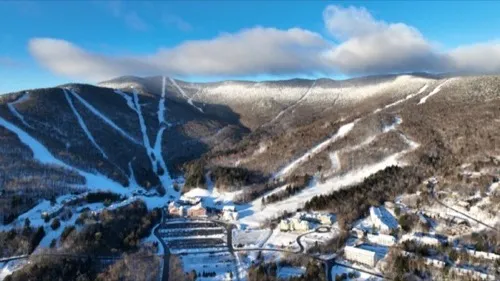
A snow report says how much fell. A cam shows what it’s actually like. On a storm morning, five minutes on the cams tells you more than any number, as long as you know where to look. Here’s the order we check them in.
1. The snow stake
Start with the snow stake cam if the mountain has one. It’s a marked board that gets cleared each day, so whatever is on it is new snow. Read the flat top of the snow, not the drift against the board, and note whether it’s marked in inches or centimeters.
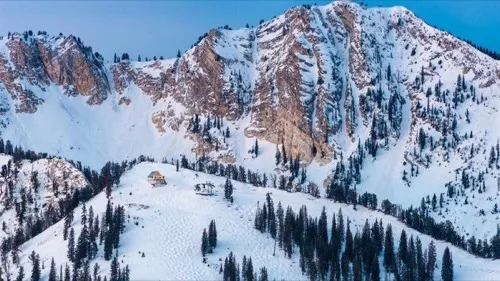
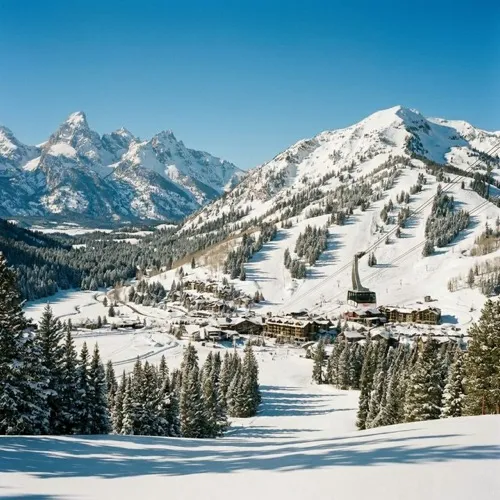
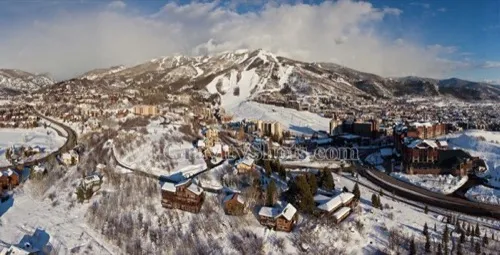
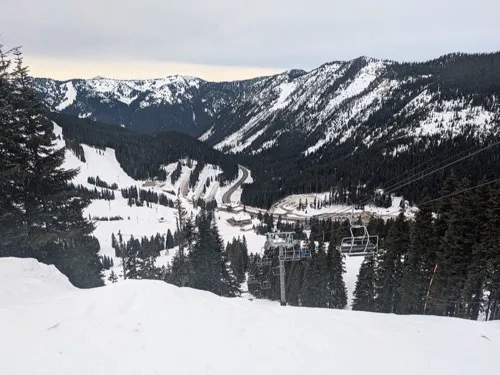
Mountains like Solitude, Jackson Hole, Steamboat, Stevens Pass and Sugarbush have one. Some have two, at different elevations, which is the best way to see where the snow line sat overnight.
2. The trees
Branches tell you two things. Snow piled on the branches means it fell without much wind, which usually means soft, even snow on the slopes. Bare, windswept branches on the upper cams mean the wind moved the snow around: deep drifts in some places, scoured hardpack in others.
3. Untracked runs
Look for a run in view before the lifts open. Smooth snow with no tracks, and the edges of the groomers softened or buried, is a good sign. If you can see corduroy clearly through the new snow, it was a light dusting. Come back to the same cam an hour after opening and you’ll see how fast it’s getting tracked out.
4. Wind and visibility at the top
Compare the base cam with the summit cam. Snow blowing sideways off a ridge, or a summit cam that’s a flat white screen, usually means wind holds on the upper lifts or flat light up high. On those days the trees and the lower mountain are where the good skiing is. If the top is clear and the base is fogged in, you might be looking at an inversion, and the sun is waiting above it.
5. The parking lot and the lift line
Plenty of resorts point a cam at the base area. A full lot at 8 a.m. tells you the lift lines and the road, and whether it’s worth heading to a smaller mountain instead. On Whistler Blackcomb and other big resorts, the base cams are also the quickest way to see if a lift is spinning yet.
6. Then check the road
The snow can be perfect and the road closed. Each mountain page shows the forecast and, where we have it, road conditions from Caltrans, UDOT or DriveBC next to the cams. Our guides to Tahoe and Mammoth chain controls and Utah canyon roads cover the roads that close most often.
A quick checklist
- Stake: how much new snow, and in which units?
- Trees: loaded or wind-stripped?
- Runs: untracked, or corduroy showing through?
- Summit: clear, foggy, or blowing?
- Base: how full is the lot?
- Road: open, chains, or closed?
If it passes all six, you already know what to do. See which resorts are open today, and go.